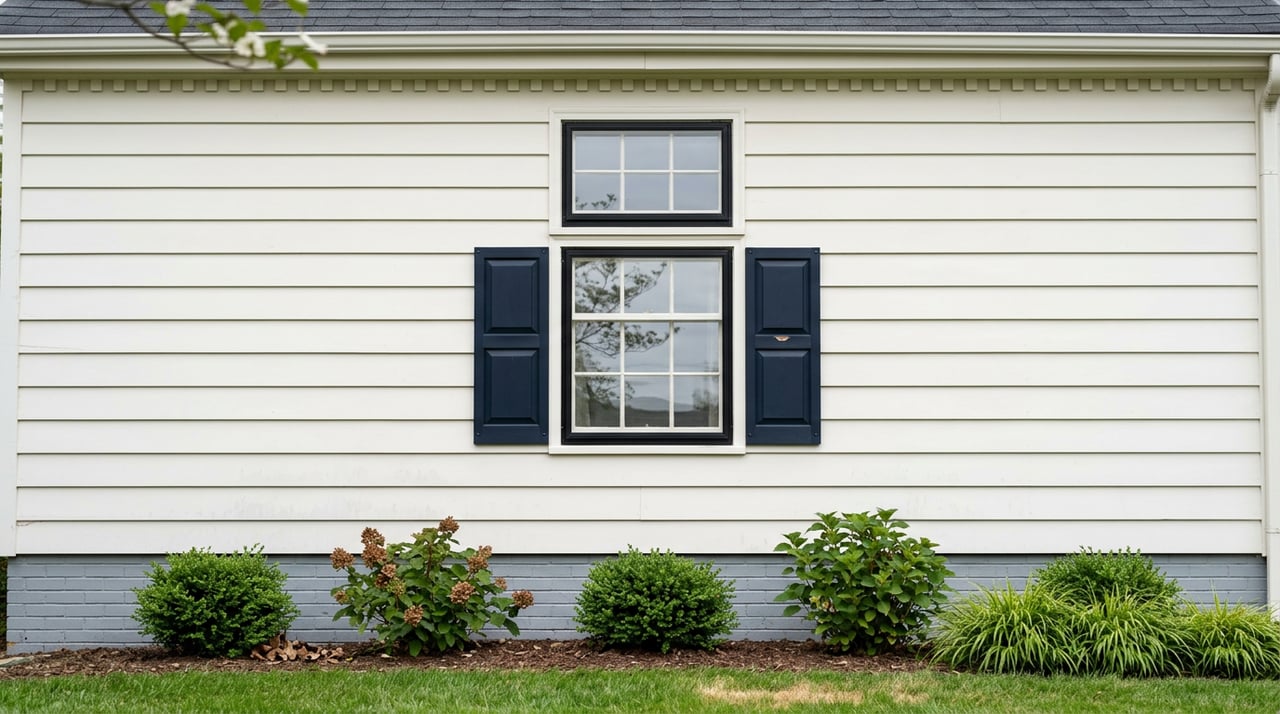
Under Contract On An Older Hannibal Home: What Inspections And Disclosures Actually Surface
August 6, 2026
August 6, 2026
A Missouri seller who says nothing on the disclosure form is not necessarily hiding anything. A Hannibal buyer who assumes the disclosure form is the story is almost always about to learn the house the hard way.
That gap is the whole game when you're buying in Hannibal's historic core. The Central Park Historic District alone contains 261 contributing buildings developed between roughly 1840 and 1939, and it sits alongside the Maple Avenue and Mark Twain districts on the National Register. If you are shopping in-town, pre-1940 stock isn't a corner case. It's the market. And once you understand how Missouri's disclosure rules interact with a house that old, you stop treating the inspection as a hurdle and start treating it as your primary source of information.
Missouri sellers complete the Seller's Disclosure Statement for Residential Property, and the state's standard is actual knowledge. Sellers must disclose known material defects such as water intrusion, flood history, sewer or septic problems, mold, asbestos, radon they know about, termites, and sinkholes. They are not required to disclose issues they aren't aware of, and they aren't required to go investigate. The disclosure should be delivered before the buyer signs the contract; if it lands after, the buyer typically gets a limited window to walk.
Read that carefully. A seller who bought the house in 2011, never opened the attic, and never had knob-and-tube called out on their own inspection can honestly check "no known issues" on the electrical line. Nothing about that is fraud. It also does nothing to protect you.
The practical translation: in Hannibal's older stock, your inspector is doing the work the disclosure form does not.
For any home built before 1978, federal law layers a second document on top of Missouri's form. Under Section 1018 of the Residential Lead-Based Paint Hazard Reduction Act of 1992, the seller has to hand you the EPA "Protect Your Family From Lead In Your Home" pamphlet, disclose known lead-based paint and any records they have, include a Lead Warning Statement in the contract, and give you a 10-day period to conduct a paint inspection or risk assessment. Parties can mutually agree in writing to shorten or lengthen that window.
Most Hannibal buyers sign the acknowledgment, don't order the assessment, and move on. That is a choice, not a requirement, and sometimes it's the right choice on a house that has been stripped and repainted three times. But those ten days are the only lead-specific leverage the federal government hands you, and they run concurrently, not after, your general inspection period on most Missouri contracts. Calendar them the day you go under contract.
Here is the sequence that actually works on a pre-1940 house:
The recurring findings in Missouri's older housing stock are well documented, and they cluster around four systems. This is where a Hannibal buyer either negotiates from evidence or writes a blank check.
| System | What's typical in pre-1940 Hannibal stock | What to ask the inspector to confirm |
|---|---|---|
| Electrical | Knob-and-tube runs surviving in attic and wall cavities, ungrounded two-prong outlets, 60-amp service, occasional Federal Pacific Stab-Lok panels | Open the panel, photograph the label, walk the attic, note any blown-in insulation covering K&T |
| Plumbing | Galvanized steel supply lines scaling internally, pre-1986 lead solder joints, cast-iron drains | Run upstairs fixtures for pressure, look for brown-water staining, note visible pipe material at the meter and water heater |
| Envelope | Original single-pane wood windows, stone or rubble foundations with settling, slate or three-tab roofs at end of service life | Probe sills for rot, check foundation walls in the basement, note the roof age |
| Air and soil | Radon, asbestos wrap on old boiler pipes, lead paint on pre-1978 window sashes and porches | Place a radon canister for at least 48 hours, flag suspect wrap for lab testing rather than touching it |
Knob-and-tube is worth its own paragraph because it drives insurance conversations, not just electrical ones. The National Electrical Code has prohibited insulation in contact with K&T since 1987. Homes where later owners added blown-in attic insulation over live K&T runs are the ones insurers most often refuse or surcharge. Full replacement typically runs $8,000 to $15,000 depending on size, and that number is your ceiling for the repair credit conversation, not an argument for walking away.
Marion County is in EPA Radon Zone 2, which predicts an average indoor screening level between 2 and 4 pCi/L. That is moderate, not high. Individual homes routinely test above the 4 pCi/L action level anywhere in the country regardless of zone, which is why a test during your inspection period is cheap information. Expect $150 to $800 for a professional test in the Hannibal market, and roughly $780 to $1,250 for a typical mitigation system if one is needed, with crawl-space encapsulation running higher.
The Hannibal-specific angle: because Zone 2 puts the local baseline right at the EPA action threshold, a passed radon test is a legitimate marketing asset when you eventually sell. Ask for the sealed canister report and keep it with your closing file.
This is the myth that costs Hannibal buyers the most sleep. National Register of Historic Places designation is honorific. It does not, by itself, tell a private owner what they can paint the house, what windows they can install, or whether they can rewire. Those restrictions come from local historic-district ordinances or an HOA, which is a separate layer.
Being in the Central Park, Maple Avenue, or Mark Twain historic district on the National Register does not mean you need permission to modernize the electrical system, replace the roof, or refinish the floors. Confirm the local overlay before assuming anything is restricted.
If you want a definitive answer for a specific address, the City of Hannibal Building Inspector's Office at 573-221-0111 is the correct call. That office also handles floodplain determinations under the NFIP, which matters for houses closer to the river.
Statewide, Missouri is still a seller's market. As of June 2026, the state carries roughly 1.54 months of supply, and homes sell for about 100.2% of list on average. Marion County looks softer than that. Local MLS data as of late June 2026 put Marion County at 4.16 months of inventory, and the county's median sale price ran about $255K over the three months ending May 2026. Palmyra's Zillow Home Value Index sat at $248,488 as of June 30, 2026, up 5.5% year over year.
Four months of inventory is not a buyer's market, but it's not a market where sellers laugh at repair requests either. When your inspector documents an active K&T circuit under blown-in insulation, or your radon test comes back at 5.2 pCi/L, that is a documented number attached to a house that has been sitting long enough for the seller to care. That is the moment credits get negotiated.
If the seller didn't disclose the knob-and-tube, can I terminate? Probably not on disclosure grounds alone, if the seller genuinely didn't know. Missouri's standard is actual knowledge. The stronger move is to use your inspection contingency, present the documented finding, and request a credit or a repair.
Does a home built in 1905 automatically require a lead paint assessment? No. Federal law requires the disclosure and the 10-day window for pre-1978 homes. It does not require you to actually test. Whether to test is a judgment call based on paint condition, whether children will live in the home, and whether you plan to do work that disturbs painted surfaces.
Can I ask the seller to complete radon mitigation before closing? Yes, and it's a common ask when a test comes back above 4 pCi/L. Sellers often prefer to offer a credit instead so they don't have to coordinate the install. Either path is normal.
Is the Hannibal Building Inspector's Office the same as a private home inspector? No. The city office enforces building codes and floodplain rules, and inspects non-owner-occupied dwellings including short-term rentals. Your private inspector works for you, on your timeline, on the specific property you're buying.
If you are under contract on a Hannibal home built before 1940, or you're weighing an offer on one, the difference between a clean closing and an expensive surprise usually comes down to which questions get asked in the first seventy-two hours. That's the work we do every week. Christal Property Group knows this housing stock, this timeline, and this market. Let's Connect.
Stay up to date on the latest real estate trends.

Founded in 2025, Christal Property Group combines fresh energy with experienced guidance to make buying, selling, and investing simple, seamless, and relationship-driven.