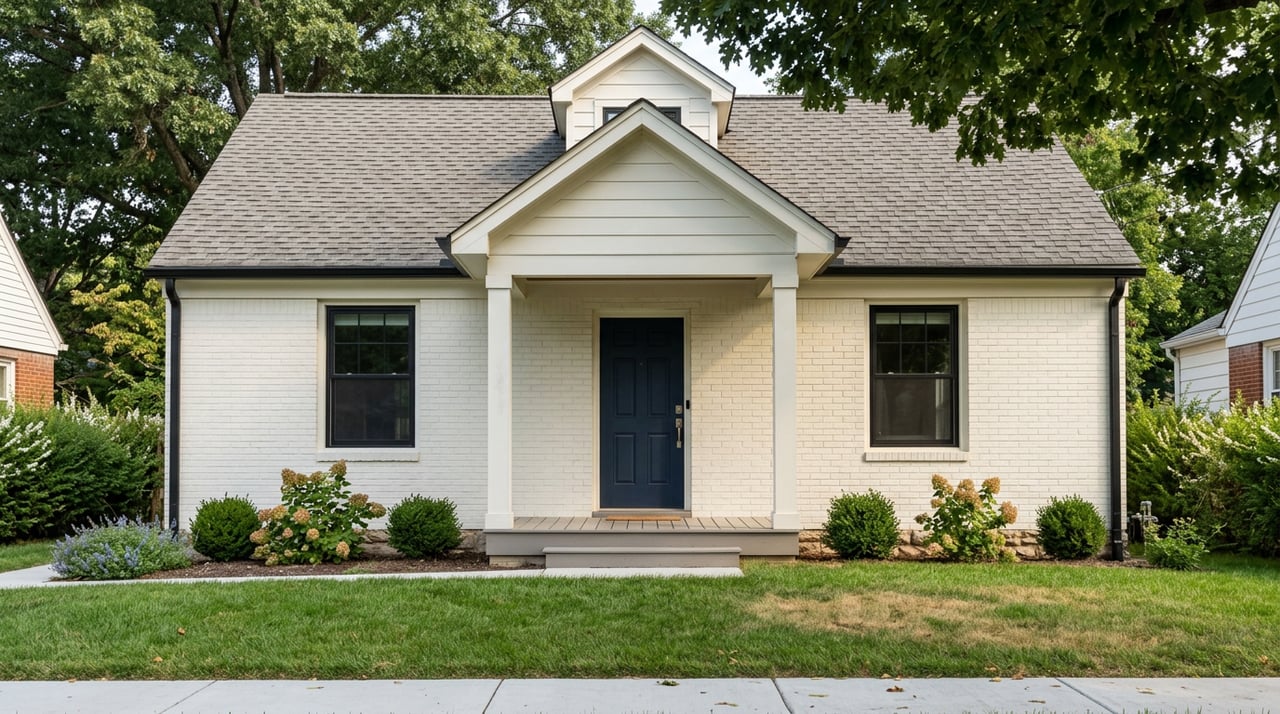
Is a National Register Home in Palmyra, Missouri Worth It?
August 20, 2026
August 20, 2026
Stand on the courthouse square in Palmyra long enough and you'll hear the same worry from almost every buyer looking at one of the town's older homes. Somebody tells them the house is on the National Register, and their first thought is a review board somewhere in Jefferson City that has to approve their paint color, their windows, maybe even their porch rail. They picture a permit desk they've never met, standing between them and a simple kitchen update.
That fear is mostly wrong, and the truth is more useful than the myth. A National Register listing does not hand anyone else control over what you do to your own house. It does something quieter and, for the right buyer, more valuable: it opens a door to real money back on a serious renovation. But only if the renovation is serious enough. Palmyra's mix of prices right now shows exactly which houses clear that bar and which ones don't, and it's not the ones you'd expect.
The National Register of Historic Places is a federal honor roll, not a set of house rules. Listing on it places no restrictions on a private owner unless federal funds or a federal permit are involved in the project. You can update a kitchen, replace a roof, or repaint trim on a listed home without anyone's sign-off, as long as you're not asking the federal government to help pay for it.
What does have teeth is a local historic preservation ordinance, the kind that requires a Certificate of Appropriateness before you touch anything visible from the street. Columbia, Kansas City, and Poplar Bluff all run commissions like that. A search of Palmyra's public records and Missouri's list of certified local preservation programs turns up no such commission here. If that holds for the specific address you're considering, and it's worth a quick call to city hall to confirm before you write an offer, then the plaque on a Palmyra house is closer to a badge than a rulebook.
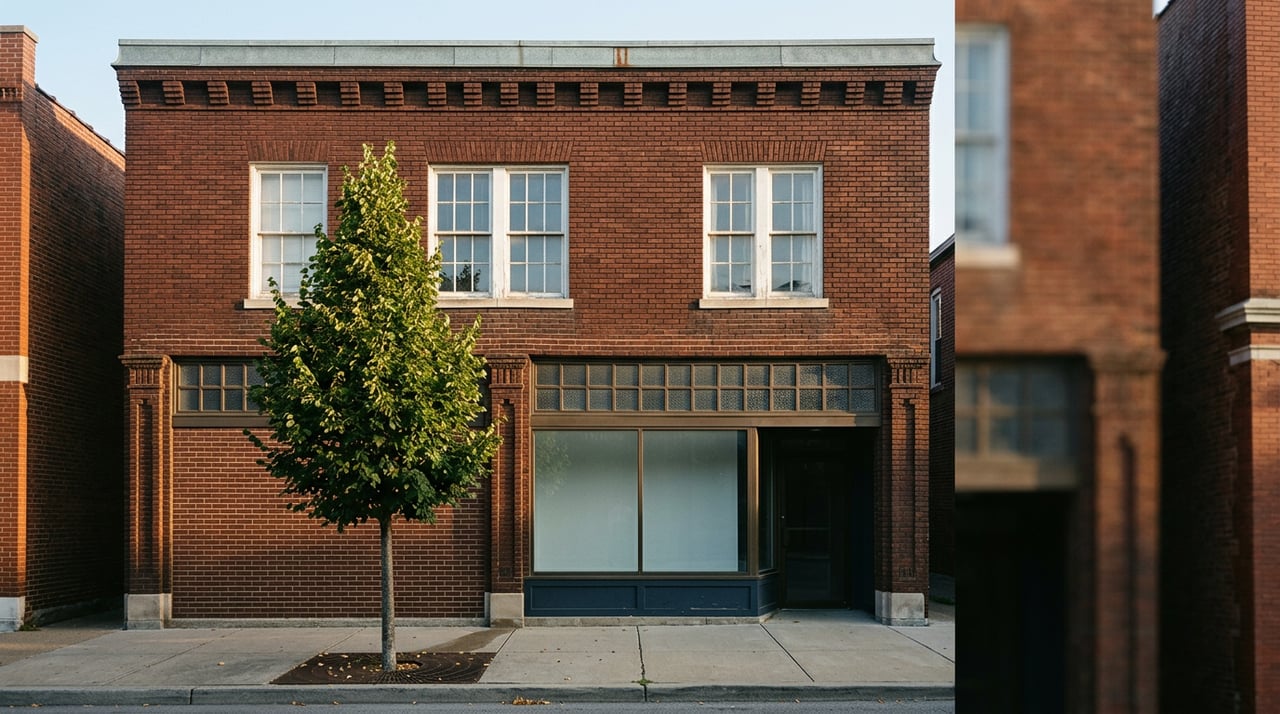
Palmyra has several properties carrying that badge, including the Culbertson-Head Farmstead, the Dryden-Louthan House, the Gardner House, the Peter J. Sowers House, the Speigle House, the Walker-Woodward-Schaffer House, and the Ephraim J. Wilson Farm Complex. Walk the 200 block of South Main and you're looking at buildings from the same era, Italianate storefronts with cast iron pillars, one of them still housing Ken's Barber Shop, which has cut hair on that spot since 1854. The Marion County Courthouse anchors the square itself, a two-story buff brick building that is the third courthouse on that site since the county organized in 1826. None of that history obligates a private homeowner to do anything in particular with their own four walls.
Here's where it gets interesting for anyone doing the math on a fixer-upper. Missouri runs a state historic preservation tax credit that owner-occupied homes can actually use, which sets it apart from the federal version.
| Federal Historic Tax Credit | Missouri Historic Tax Credit | |
|---|---|---|
| Credit rate | 20% of rehab costs | 25% (Kansas City or St. Louis) or 35% (everywhere else, including Palmyra) |
| Personal residence eligible | No, income-producing property only | Yes |
| Spending threshold | Must exceed the property's adjusted basis or $5,000, whichever is greater | Rehab costs must exceed 50% of the property's purchase basis |
| Administered by | National Park Service, with Missouri's State Historic Preservation Office | Missouri Department of Economic Development, with SHPO review |
The federal 20% credit is off the table if you plan to live in the house yourself. It's built for rental and commercial rehabs. The state credit is the one that matters for a family buying a home to live in, and outside Kansas City and St. Louis, which includes Palmyra, it pays 35 cents on every qualified dollar spent rehabbing a certified historic structure.
The state legislature nearly lost this program earlier in 2026. A bill carrying the tax credit modernization got tangled up with an unrelated provision about backyard chickens, a Cole County judge struck the whole thing down on a single-subject technicality, and lawmakers had to pass a fix, House Bill 3080, on the final day of the session to restore it. The program is intact and current as of this writing, but it's a reminder that these credits live inside state budgets and legislative sessions, not permanent guarantees.
The credit doesn't reward the house. It rewards the size of the project.
That's the part buyers miss. The threshold isn't a flat dollar amount. It's 50% of what you paid for the property. A house that cost less needs less rehab spending to clear the bar. A house that cost more needs proportionally more.
Palmyra's current listings sort into rough price bands. Modest homes and fixer-uppers run from about $100,000 to $150,000. Remodeled homes and most post-1950s properties land between $150,000 and $360,000. Larger homes, over 3,500 square feet or built in the current century, run from roughly $460,000 to $750,000.
Take a fixer bought at $120,000. To clear the 50% threshold, you'd need to spend just over $60,000 on qualified rehabilitation. A serious project, new mechanicals, structural repair, window restoration done to standard, gets there without much trouble, and the state would hand back roughly 35% of every qualified dollar above that line.
Now take a home already renovated and priced near the $300,000 range, which is close to what local agents describe as the median for a traditional three-bedroom in town. To clear 50% of that basis, you'd need to spend $150,000 on top of the purchase price. Most buyers of an already-updated house aren't planning to spend that much again. They bought the finished product. The credit was built for the unfinished one.
That's the mechanism working in reverse of what most people assume. The move-in-ready historic home, the one that photographs well and sells fast, is the one least likely to ever touch this credit. The rough one nobody's called yet, sitting at the low end of the range, is the one where the math actually pencils out.
Palmyra's current numbers back this up. Zillow's tracking put the average home value in Palmyra at $248,488 as of June 30, 2026, up 5.5% over the previous year. Active listings in August 2026 carried a median asking price of $299,000, at $147 a square foot, with homes spending a median of 49 days on the market, the same pace as August 2025.
That gap between the average value and the median asking price isn't a rounding error. It's the mix of what's for sale. The average gets pulled down by the modest and unrenovated end of the market, including some of the antebellum-era cottages and farmhouses that are exactly the properties eligible for the state credit and exactly the ones still priced low enough to make the math work. The median asking price sits higher because what's actively listed skews toward homes someone has already brought up to date, priced for buyers who want the work done, not the credit.
If you're touring a National Register property in Palmyra this year, the honest question isn't whether the town or the state will let you renovate it. Nothing here is stopping you. The real question is whether the house is priced low enough, and rough enough, that a real rehab project would cross that 50% line and put a third of your spending back in your pocket.
Before you write an offer on a listed property, a few things are worth doing first:
Palmyra's Heritage Seekers historical society keeps records on the town's older properties and can often point a buyer toward existing documentation before they ever file paperwork with the state. It's a useful first call, before the contractor and before the tax credit application.
None of this replaces a conversation with a tax professional or the state historic preservation office before you commit to a rehab budget. But knowing which direction the incentive actually points, toward the unfinished house rather than the finished one, changes how you look at a listing on Palmyra's square.
If you're weighing one of these homes and want a second set of eyes on what a specific property might really cost to bring up to standard, or whether the numbers make the credit worth chasing, Christal Property Group knows this stretch of Marion County well. Let's Connect before you make an offer, not after.
Stay up to date on the latest real estate trends.
Founded in 2025, Christal Property Group combines fresh energy with experienced guidance to make buying, selling, and investing simple, seamless, and relationship-driven.