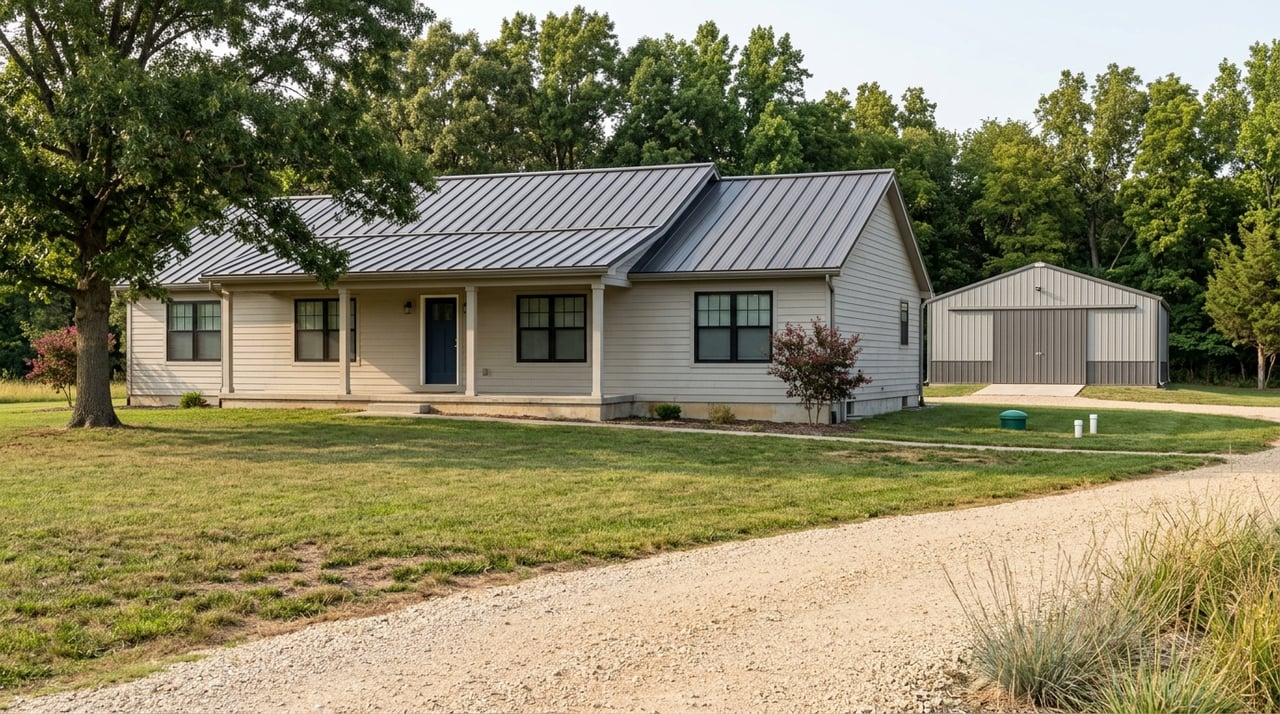
Buying A Home With Acreage Near Hannibal: What To Check
July 16, 2026
July 16, 2026
Thinking about buying a home with acreage near Hannibal? The extra space can be a great fit if you want room for hobbies, animals, outbuildings, or simply more privacy. But with rural property, the house is only part of the decision. You also need to understand access, boundaries, water, wastewater, and county rules so you know what you are really buying. Let’s dive in.
When you buy acreage, the total number of acres does not always equal the number of acres you can easily use. A tract may include easements, setback areas, floodplain concerns, or access issues that affect how you live on the property or what you can build later.
Before you get too far into the process, confirm how the property is accessed and whether that access is public or private. Missouri survey guidance notes that easements can appear as title exceptions, and surveys should identify access details. In Marion County, land records are preserved by the Recorder of Deeds, and the Assessor provides GIS mapping and property search tools that can help you review parcel information.
A long driveway can look simple on a showing, but the legal details matter. You will want to know whether the driveway crosses another property, whether there is a recorded easement, and who is responsible for maintenance if access is shared or private.
This is one of the easiest places for acreage buyers to make assumptions. A property may feel secluded and straightforward in person, but if access is not clearly documented, it can create problems later. That is why survey and title review are so important on rural properties.
Many buyers naturally look at existing fencing and treat it like the lot line. In Missouri, that can be risky. State fence law defines what a lawful fence is, but an existing fence should not automatically be treated as the surveyed boundary.
In plain terms, a pasture fence may be useful for livestock or marking a general edge, but it is not a substitute for confirming actual property lines. If boundary location matters to you, a surveyor is often one of the most important professionals to bring in.
Acreage gives you flexibility, but that does not mean you can place buildings anywhere you want. Marion County land use rules can affect how close structures can be to property lines or road right-of-way lines.
For county-governed acreage, yard distances are measured from property lines and or right-of-way lines. The county also states that roads are treated as major highways for front-yard requirements on certain farm buildings that are built, reconstructed, or enlarged after the order.
If the property is in the R-R Rural-Residential district, the county states that a single-family dwelling requires 3 acres and a minimum lot width of 200 feet. The district also includes 80-foot front setbacks, 50-foot side setbacks, and 80-foot rear setbacks.
Accessory buildings for those uses must be on the same lot and have 15-foot side and rear setbacks. If you are picturing a future shop, detached garage, or shed, those details matter more than many buyers expect.
If the property is in an agricultural district, setbacks still apply. The county order states that yard distances are measured from property lines and or right-of-way lines, and certain farm buildings must meet front-yard requirements.
This is especially important if you plan to expand the property later. A barn, equipment shed, or other outbuilding may seem like a simple future project, but the county rules should be checked before you buy, not after.
Not every acre on a rural property is equally usable. In Marion County, if a parcel falls in the FP district, the county order points buyers to the floodplain ordinance and map.
That matters because floodplain status can affect building plans, improvements, and how you evaluate the usable part of the tract. If future additions or a new outbuilding are part of your plan, checking floodplain status early can save time and frustration.
Many acreage homes near Hannibal rely on private wells. That is common, but it also means you need to evaluate the water system as part of your due diligence.
Missouri DHSS recommends testing private well water at least once each year and any time the well is serviced or the water changes in appearance, smell, or taste. DHSS also notes that it does not provide private well testing specifically for real estate transactions, so buyers who want testing during a purchase typically use a private lab.
A private well is more than a water source. Its location, condition, and surrounding setup all matter. Missouri DNR says the wellhead must extend at least one foot above grade, and setbacks from septic systems, sewers, fuel tanks, chemicals, and animal feedlots are important.
If there is an abandoned well on the property, that matters too. DNR says abandoned wells should be plugged. If you are buying acreage with multiple structures or a long property history, this is worth asking about directly.
If a home is not connected to a public sewer system, the wastewater setup deserves close review. Missouri does not require a septic inspection before every real estate transaction statewide, but if a buyer or lender requests one, it must be completed by a licensed individual.
Marion County Health Department states that its environmental health staff works with realtors, homeowners, and installers on permits and on-site evaluations. The department also evaluates private water supplies and wastewater treatment systems, which makes local review especially important for rural buyers.
When you are evaluating an acreage property, ask practical questions about the wastewater system, including:
Even if the house looks move-in ready, a private wastewater system is one of the most important parts of the property. It can affect financing, future building plans, and your comfort level after closing.
A lot of buyers shop for acreage because they want more than just a house. You may be thinking about adding a workshop, storing equipment, building a shed, or updating older outbuildings over time.
That is exactly why future-use questions should be part of your home search. Marion County’s building permit section asks applicants to provide a sketch showing property lines and proposed building locations, plus a wastewater permit copy if applicable.
Some rural properties have older structures or uses that do not match current standards. The county order says nonconforming uses may continue if they are not vacant for more than a year and are not destroyed by more than 50% of fair market value, but they cannot be expanded unless they conform.
That can be a big deal if you are buying a property because of an existing barn, workshop, or layout that you hope to enlarge later. What exists today is not always the same as what can be expanded tomorrow.
Acreage homes near Hannibal do not always compare neatly to in-town homes. Finished square footage still matters, but it is often only one part of the story.
On rural properties, value can also be shaped by acreage size, access, outbuildings, and private systems. Fannie Mae notes that in scarce-sales situations, comparable sales may come from competing areas or be less similar if the analysis is properly documented. That is one reason rural pricing can feel less straightforward than city pricing.
If you are buying near Hannibal, it helps to work with someone who understands how acreage properties are actually weighed in the local market. Two homes with similar square footage can perform very differently if one has strong access, usable land, and functional outbuildings while the other has system concerns or layout limits.
This is where local market knowledge matters. Rural homes often require a more careful, property-by-property review than a standard subdivision home.
You do not have to solve every acreage question on your own. The key is knowing which professionals to involve and when.
Based on the property, buyers may need help from:
Having the right team can make the process feel much simpler. It also helps you make decisions based on facts instead of guesswork.
If you want a practical way to think through a rural property near Hannibal, start with this short checklist:
Acreage can be a great fit, but the best rural purchases usually come from careful planning upfront. The more clearly you understand the land and systems, the more confidently you can move forward.
If you are looking at homes with land around Hannibal, working with a local team that understands rural property details can make the process less stressful and much more informed. If you want help sorting through acreage options, due diligence questions, and what to look for before you write an offer, reach out to Madison (Maddie) Christal.
Stay up to date on the latest real estate trends.
Founded in 2025, Christal Property Group combines fresh energy with experienced guidance to make buying, selling, and investing simple, seamless, and relationship-driven.